Ever wonder how your online orders get to your doorstep so incredibly fast these days? I’ve been completely fascinated by the silent revolution unfolding within logistics: smart robot warehouses.
They’re not just futuristic concepts anymore; major companies are implementing these incredible systems to boost efficiency, slash delivery times, and frankly, blow our minds with their precision.
This transformation isn’t just about technology; it’s about meeting our insatiable demand for speed and convenience, and it’s absolutely changing the game for everyone.
Curious to see how this incredible tech is being put into action right now? Let’s explore some real-world examples together.
Ever wonder how your online orders get to your doorstep so incredibly fast these days? I’ve been completely fascinated by the silent revolution unfolding within logistics: smart robot warehouses.
They’re not just futuristic concepts anymore; major companies are implementing these incredible systems to boost efficiency, slash delivery times, and frankly, blow our minds with their precision.
This transformation isn’t just about technology; it’s about meeting our insatiable demand for speed and convenience, and it’s absolutely changing the game for everyone.
Curious to see how this incredible tech is being put into action right now? Let’s explore some real-world examples together.
The Unseen Maestros: Orchestrating Deliveries with Robotic Precision
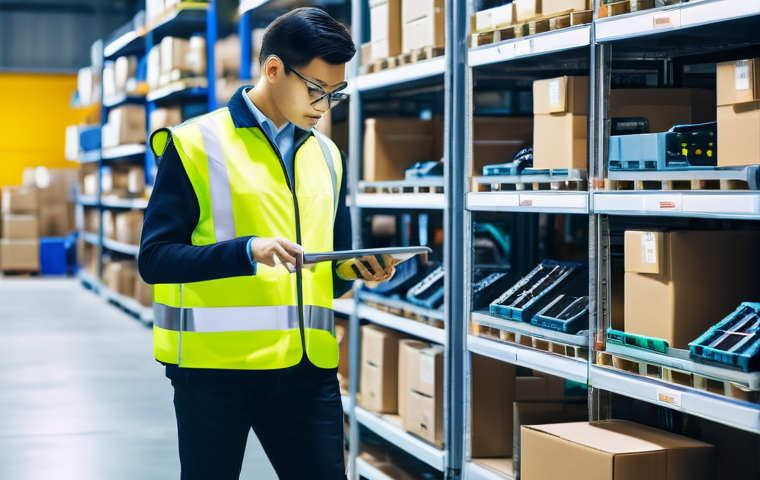
The Dance of Automation: From Click to Conveyor
When I first started delving into the world of smart warehouses, I imagined clunky, slow robots. Boy, was I wrong! What I’ve seen is a meticulously choreographed dance where every component moves with an almost artistic precision.
From the moment you click ‘buy’ online, an invisible ballet begins. Autonomous Mobile Robots (AMRs) and Automated Guided Vehicles (AGVs) zoom across the warehouse floor, fetching items from towering shelves and transporting them to packing stations.
They’re not just following a fixed path; advanced AMRs, for instance, can dynamically navigate complex environments, avoiding obstacles and optimizing their routes in real-time, which is truly incredible to witness.
It’s like watching a perfectly synchronized team, but made of steel and silicon, all working tirelessly without a coffee break. This seamless integration of various robotic systems, from articulated arms for delicate picking to massive transport robots, is what makes these warehouses incredibly efficient.
It’s an entire ecosystem of synchronized machines, making sure your favorite new gadget or a fresh carton of groceries gets precisely where it needs to be.
Why Speed Matters: Meeting Our Instant Gratification Needs
Let’s be real, in today’s world, patience is a virtue few of us possess when it comes to online shopping. We want it now, if not sooner! And this is exactly where smart robot warehouses shine.
The sheer speed with which these automated systems can process orders is a game-changer. Manual processes, as you can imagine, are prone to human error and simply can’t keep up with the volume and velocity of modern e-commerce.
But robots? They operate 24/7, tirelessly picking, sorting, and packing with consistent precision. I’ve heard stories of warehouses boosting productivity by 25-70% and cutting logistics costs by up to 40% thanks to these automated systems.
Think about it – that means less waiting for your package, more reliable delivery times, and ultimately, a much happier you. It’s not just about getting things from point A to point B; it’s about redefining what “fast delivery” even means in our daily lives.
Beyond the Hype: Real-World Triumphs in Automated Fulfillment
Giants Leading the Charge: Amazon, Walmart, and Beyond
When we talk about smart robot warehouses, some names immediately spring to mind. Amazon, of course, is a prime example (pun intended!). They’ve famously deployed thousands of AI-powered robots in their fulfillment centers worldwide, handling the heavy lifting of picking, packing, and transporting items.
This allows their human workforce to focus on more intricate tasks, like quality control or customer service. But it’s not just Amazon. Walmart, another retail giant, has implemented AI-driven robots to scan shelves, track inventory, and manage restocking, ensuring products are always available and shelf accuracy is maintained.
I personally find it inspiring to see how these companies aren’t just adopting technology for technology’s sake, but truly integrating it to solve complex logistical challenges and elevate customer experience.
These aren’t just isolated experiments; they’re large-scale transformations that are setting the standard for the entire industry.
Transforming Legacy Systems: Giving Old Warehouses New Life
It’s easy to think that only brand-new, purpose-built facilities can leverage smart robot technology, but that’s far from the truth. Many companies are proving that even existing, older warehouses can be revolutionized.
By strategically implementing solutions like Autonomous Storage and Retrieval Systems (AS/RS) or integrating collaborative robots (cobots), traditional warehouses can significantly boost their efficiency without tearing down the whole building.
For instance, some logistics firms have seen huge improvements in throughput and accuracy by introducing autonomous picking solutions, where robots move products to employees who then handle the final stages.
This kind of phased approach makes the transition more manageable and proves that you don’t need to be a tech titan to start reaping the benefits. It’s about smart, thoughtful upgrades that breathe new life into existing infrastructure, a testament to the adaptability of these technologies.
Humans and Robots: A Powerful Partnership, Not a Replacement
Evolving Roles: Upskilling for the Automated Age
One of the biggest misconceptions I hear is that robots are here to steal jobs. But honestly, from what I’ve observed, it’s more about evolution than elimination.
The reality is that automation is creating new types of roles and demanding new skill sets. Workers in smart warehouses aren’t just lifting boxes; they’re becoming automation supervisors, data analysts, maintenance technicians for robotic systems, and process optimization specialists.
Think about it – someone needs to monitor these incredible machines, troubleshoot issues, and interpret the massive amounts of data they generate. Companies are investing in comprehensive training programs to help employees transition, focusing on skills like operating and maintaining new technology.
I personally believe this shift offers exciting opportunities for individuals to grow their careers and engage in more strategic, value-added tasks, moving away from repetitive and physically demanding labor.
It’s about leveraging human creativity and critical thinking where it matters most.
The Uniquely Human Touch in a Tech-Driven World
Even with all the incredible advancements in robotics and AI, there are certain things that only humans can bring to the table. Robots excel at repetitive tasks, speed, and precision, but they often lack the initiative, creativity, and adaptability to respond to unexpected situations.
That’s where the “human touch” truly shines. In automated warehouses, people are still crucial for quality control, handling complex or customized orders, and resolving unforeseen glitches in the system.
For example, when it comes to delicate items or unique packaging requirements, human dexterity and judgment are often indispensable. I’ve heard experts say that while automation provides speed, humans provide flexibility and problem-solving capabilities, which is a perfect balance.
This collaboration, where humans and robots work side-by-side (often called “cobots” or collaborative robots), is proving to be incredibly effective, leading to an 85% increase in productivity compared to human-only or robot-only teams.
It’s a testament to the idea that the future isn’t about replacing people, but empowering them with incredible tools.
The Tech Under the Hood: What Makes These Warehouses “Smart”?
AI and Machine Learning: The Brains Behind the Brawn
It’s easy to see the physical robots moving around, but the real magic often happens behind the scenes with Artificial Intelligence (AI) and Machine Learning (ML).
These aren’t just buzzwords; they’re the brains that make a smart warehouse truly intelligent. AI algorithms analyze vast amounts of data in real-time, optimizing everything from inventory placement and order picking routes to demand forecasting.
Think about it: ML algorithms constantly learn from past data, improving the system’s ability to predict needs and make smarter decisions over time. This means fewer mis-picks, faster routes for robots, and a significant reduction in costly errors.
When I learned about predictive maintenance, for example, where AI analyzes equipment performance to anticipate failures *before* they happen, I was truly impressed.
It’s like the warehouse has a crystal ball, constantly optimizing itself to run smoother and more efficiently, saving businesses a ton of money and headaches.
IoT, Sensors, and 5G: The Connected Ecosystem

A smart warehouse isn’t just about robots; it’s an entire ecosystem of interconnected technologies. The Internet of Things (IoT) plays a massive role here, with sensors constantly collecting data on everything from inventory levels to the temperature of perishable goods and even equipment status.
This real-time data is crucial for managers to make informed decisions and quickly address any issues. Imagine knowing the exact location of every single item in your warehouse at any given moment – that’s the power of IoT.
And what about connectivity? That’s where 5G comes in. With its lower latency and higher data transfer rates, 5G networks enable instantaneous communication between all these devices, robots, and systems, ensuring seamless integration and coordination.
I’ve found that this level of connectivity is what truly allows a warehouse to be “smart,” transforming it into a responsive, agile hub that can adapt to changing demands on the fly.
It’s truly a marvel of modern engineering.
Unlocking Efficiency: The Bottom-Line Benefits for Businesses (and You!)
Slashed Costs and Supercharged Productivity
Let’s talk about what really gets businesses excited: the financial benefits. Implementing smart robot warehouses isn’t just a fancy upgrade; it’s a strategic investment that delivers tangible returns.
We’re talking about significantly reduced operational costs – think lower labor expenses, minimized errors that prevent costly returns, and optimized inventory management that cuts down on holding costs.
Reports suggest that AI-powered robots can increase warehouse efficiency by up to 50% and even reduce labor costs by 70%. When I heard about a women’s apparel brand that achieved a 100% increase in operational efficiency through robotic picking, I was genuinely blown away.
This massive boost in productivity, often enabling warehouses to operate continuously without breaks or fatigue, means businesses can process more orders, faster, and with fewer resources.
This efficiency ultimately translates to better prices and faster service for us, the consumers. It’s a win-win!
Pinpoint Accuracy and Sustainable Operations
Beyond just speed and cost, smart warehouses bring an unparalleled level of accuracy. Human error is a natural part of manual processes, but robots? They perform tasks with consistent precision, drastically reducing mis-picks and packing mistakes.
This directly impacts customer satisfaction (no more getting the wrong item!) and saves businesses money on returns and reprocessing. But it’s not just about accuracy; these systems also contribute to sustainability, which is something I deeply care about.
By optimizing routes, minimizing fuel consumption, and using energy-efficient robotics, smart warehouses can significantly reduce their carbon footprint.
AI can predict demand more accurately, preventing overproduction and waste. Smart energy management systems even adjust lighting and heating based on real-time needs, making these massive facilities much greener.
It’s fantastic to see technology not only driving profit but also promoting environmental responsibility.
| Benefit Category | Key Advantages | Impact on Business & Consumers |
|---|---|---|
| Efficiency & Speed | Automated picking, sorting, packing; 24/7 operation; optimized routes. | Faster order fulfillment, reduced delivery times, increased throughput. |
| Cost Reduction | Lower labor costs; reduced errors; optimized inventory; less downtime. | Improved profitability, more competitive pricing, efficient resource allocation. |
| Accuracy | Robotic precision; AI-driven inventory tracking; real-time data. | Fewer mis-picks/returns, higher customer satisfaction, reliable stock levels. |
| Sustainability | Optimized energy use; reduced waste; predictive demand forecasting. | Lower carbon footprint, reduced overstocking, eco-friendly operations. |
| Workplace Safety | Robots handle dangerous/repetitive tasks; reduced human physical strain. | Fewer injuries, improved employee morale, more engaging work roles. |
Navigating the Future: Challenges and What’s on the Horizon
Overcoming Hurdles: Investment and Adaptation
While the benefits are undeniably huge, embracing smart robot warehouses isn’t without its challenges. The initial investment can be substantial, requiring significant capital outlay for the robots, AI software, and infrastructure upgrades.
It’s not a decision taken lightly! Plus, there’s the learning curve involved in integrating these complex systems and adapting existing workflows. Companies need to navigate regulatory compliance, especially with autonomous vehicles and drones, and manage the social implications of automation on the workforce.
But I truly believe these are hurdles, not roadblocks. The rapid evolution of technology and the clear return on investment are pushing more and more businesses to tackle these challenges head-on.
It’s a journey, not an overnight switch, but one that promises incredible rewards for those willing to innovate.
The Next Big Things: Dark Warehouses and Beyond
So, what’s next for smart robot warehouses? The future is incredibly exciting! I’ve been reading about the concept of “dark warehouses,” where operations are fully autonomous and require minimal to no human intervention, running entirely by data and robotics, often without needing lights or heating.
We’re also seeing an increased focus on collaborative robots (cobots) that work even more seamlessly alongside humans, allowing for incredible flexibility and efficiency.
Expect to see advanced AI taking predictive analytics to new heights, optimizing everything from maintenance to demand forecasting with even greater accuracy.
Drones are becoming more common for inventory tracking, swiftly scanning barcodes and RFID tags with incredible precision. And let’s not forget the role of dynamic power transfer for mobile robots, eliminating downtime for charging and keeping those automatons moving continuously.
The evolution is constant, and it’s truly a thrilling time to witness the logistics world transform before our very eyes.
Wrapping Things Up
After diving deep into the fascinating world of smart robot warehouses, it’s clear that we’re standing at the cusp of a truly transformative era in logistics.
What once seemed like science fiction is now a tangible reality, reshaping how goods move around the globe and fundamentally changing our expectations as consumers.
I hope this journey through the unseen maestros and incredible technologies has opened your eyes to the precision, efficiency, and sheer ingenuity driving this silent revolution.
The future of delivery isn’t just faster; it’s smarter, more reliable, and constantly evolving, and I’m genuinely thrilled to see what new innovations emerge next!
Useful Insights for the Curious Mind
1. Understanding Your Delivery Speed: Ever wondered why some packages arrive almost instantly while others take a bit longer? A key factor is the level of automation in the fulfillment center. Highly automated warehouses, often powered by AI and robotics, can process orders at an astonishing pace, leading to those delightful next-day or even same-day deliveries. Recognizing this helps us appreciate the intricate systems working behind the scenes and understand the logistical capabilities of different retailers. It’s not just about how close you are to a warehouse, but how smart that warehouse actually is!
2. Exploring New Career Horizons: If you’re looking for a career change or just curious about the job market, the rise of smart warehouses is creating a plethora of new opportunities. While some traditional roles may evolve, there’s a growing demand for automation specialists, robotics technicians, data analysts, AI ethicists, and system integrators. These roles often require a blend of technical skills and problem-solving abilities. Many companies are investing heavily in training programs, so even if you don’t have a background in robotics, there might be avenues for upskilling and jumping into this exciting field. It’s a dynamic sector that truly values adaptability and continuous learning.
3. The Eco-Friendly Side of Automation: Beyond just speed and cost, smart robot warehouses are surprisingly beneficial for the environment. By optimizing routes, minimizing physical space requirements, and enabling precise demand forecasting through AI, they significantly reduce waste and energy consumption. Fewer mis-picks mean less product returns, which in turn means less shipping and packaging waste. These facilities can also run with less lighting and heating when fully automated (“dark warehouses”), further cutting down on energy use. It’s refreshing to see how cutting-edge technology can align so well with sustainability goals, making our consumption habits a little less impactful on the planet.
4. Leveraging Smart Tech for Small Businesses: You might think smart warehouse technology is only for the Amazons of the world, but that’s far from the truth. Smaller businesses can also adopt scalable automation solutions. Cloud-based inventory management systems, collaborative robots (cobots) for specific tasks, and even AI-powered forecasting tools are becoming more accessible and affordable. Outsourcing fulfillment to 3PLs (third-party logistics providers) that utilize these advanced systems is another fantastic way for smaller e-commerce brands to offer competitive delivery speeds and accuracy without the massive upfront investment. It’s all about finding the right tools and partnerships that can grow with your business, without breaking the bank.
5. Keeping an Eye on Emerging Innovations: The world of smart logistics is constantly evolving, and there are some incredibly exciting innovations on the horizon. Watch out for more widespread use of drones for internal inventory checks, which can scan entire warehouses in minutes. Expect even more sophisticated AI that can predict supply chain disruptions before they happen, allowing for proactive adjustments. We’re also seeing breakthroughs in dynamic wireless charging for robots, meaning less downtime for recharging and even more continuous operation. These advancements promise to push the boundaries of efficiency and speed even further, making our future shopping experiences even more seamless and surprising. It’s a space where innovation never sleeps!
Key Takeaways
Smart robot warehouses are fundamentally reshaping the logistics landscape, moving beyond mere automation to create truly intelligent and responsive fulfillment centers.
The core benefits revolve around dramatically increased efficiency and speed, ensuring our online orders reach us faster and with greater reliability.
Crucially, this isn’t a story of robots replacing humans, but rather of a powerful collaboration where automation handles repetitive tasks, freeing human talent for more strategic, creative, and problem-solving roles.
Underlying this transformation are sophisticated technologies like AI and Machine Learning, which act as the brains optimizing every operation, alongside the robust connectivity provided by IoT and 5G, creating a seamlessly integrated ecosystem.
Businesses reap substantial rewards in the form of slashed operational costs, pinpoint accuracy in order fulfillment, and enhanced sustainability efforts, which ultimately translate into better prices and service for us consumers.
While initial investment and adaptation present challenges, the rapid evolution and clear return on investment point to an exciting future, where “dark warehouses” and even more advanced cobot integrations will become the new norm, continually elevating our entire e-commerce experience.
Frequently Asked Questions (FAQ) 📖
Q: “Okay, so how do these ‘smart robot warehouses’ actually work their magic to get my packages here so much quicker?”
A: I know, right? It almost feels like sci-fi! From what I’ve seen and learned, it’s truly a symphony of incredible tech working behind the scenes.
Imagine this: instead of people walking miles through massive aisles, robots zip around, picking, sorting, and packing items with mind-boggling speed and accuracy.
I’ve heard stories about systems like Amazon’s Kiva robots (now Amazon Robotics), where entire shelves literally move to the human packer, drastically cutting down on travel time.
Then there are Automated Guided Vehicles (AGVs) or Autonomous Mobile Robots (AMRs) that can navigate complex warehouse layouts, avoiding obstacles and optimizing routes on the fly.
It’s not just about speed; it’s about precision. These systems often integrate with AI and sophisticated software that predicts demand, manages inventory, and even plans the most efficient packing routes.
This means fewer errors, less wasted time, and ultimately, your new gadget or favorite book landing on your porch way sooner than you’d expect. Honestly, seeing a video of it in action is like watching a highly choreographed ballet, but for logistics!
Q: “This sounds amazing, but are big companies really putting this into action, or is it still mostly in the experimental phase?”
A: Oh, absolutely! It’s not just a concept anymore; major players are all-in, and it’s fascinating to see. Companies like Amazon, of course, are pioneers, using thousands of robots in their fulfillment centers worldwide to handle everything from tiny electronics to bulkier items.
I remember reading about Walmart also investing heavily in automation for its distribution centers to speed up grocery delivery, especially for those last-mile challenges we all face.
Even fashion retailers like Zara have adopted advanced automation to quickly sort and ship their ever-changing inventory to stores globally, ensuring they stay ahead of trends.
What I find super cool is that it’s not just the mega-corporations. Smaller, forward-thinking e-commerce businesses are also leveraging scalable robot solutions to compete effectively.
It’s a testament to how crucial efficiency and speed have become in today’s market – if you’re not fast, you’re definitely falling behind!
Q: “Beyond just speed, what’s the real game-changer for me as a consumer, and is this truly the future of how we’ll get our stuff?”
A: That’s a fantastic question, and one I think about a lot! While speed is definitely a huge win (who doesn’t love getting their package early?), the real game-changer for us consumers goes much deeper.
First, there’s the incredible accuracy. Robots, being tireless and precise, make far fewer mistakes than humans in repetitive tasks, meaning fewer wrong items or missed orders for you.
Then, think about availability. With highly optimized inventory management, there’s less chance of that dreaded ‘out of stock’ message appearing just when you want something.
For me, personally, I’ve noticed a significant reduction in delivery times, especially for things I order on a whim – that instant gratification is hard to beat!
And yes, I genuinely believe this is the future. As consumer expectations for instant gratification and seamless service continue to rise, robot warehouses will become the standard, not the exception.
They’re not just about current efficiency; they’re laying the groundwork for even faster, more personalized, and more sustainable deliveries down the line.
It’s an exciting time to be an online shopper, that’s for sure!